All posts by Erik Zalewski

Intranasal Epinephrine (“neffy”) Is Now Available . . . At A “Hefty” Cost

As a followup to a previous update, ARS Pharmaceuticals, Inc.  has received FDA approval to sell “neffy” an intranasal (IN) epinephrine that is designed for use in severe allergic reactions.  “neffy” is an aqueous epinephrine preparation with the addition of the functional excipient Intravail® A3 (dodecylmaltoside) to improve the bioavailability of the drug, increasing absorption through nasal mucosa to injection-like levels without known injection-related adverse effects such as pain or irritation.  The sprayer device is identical in design to that which is already used to administer six other medications, including Narcan (naloxone).

As you can imagine, this device has the potential to be a game changer for dentists, as it is much more convenient and comfortable for providers who do not perform regular intramuscular injections. I have worked tirelessly with ARS Pharmaceuticals, Inc. and other wholesalers to bring this to you.  However, the bad news is that “neffy” is being priced exorbitantly: $766.80 for just two doses.  In addition, the manufacturer has no interest in working with smaller distributors.

This might also be a good time to think about the incidence of anaphylaxis in dentistry.  In my hundreds of conversations with dentists, it seems to me that anaphylactic shock is one of the most feared emergencies, yet very few have actually encountered a true anaphylactoid-like reaction in practice or elsewhere.  This inexperience is consistent with estimates that anaphylaxis occurs in 0.004 – 0.015 cases per dentist per year. 1-3  Morbidity occurs only in 0.5% to 1.5% of all anaphylaxis cases.4-6

Please do not get the impression that I am advocating for a dentist to abdicate responsibility to be prepared to manage an anaphylactoid-like scenario.  However, given the above, it seems difficult to justify spending upwards of $800 every year or so on something you will, in all likelihood, not use.  

Remember that drawing fluid from a vial and injecting it intramuscularly is a skill that every dentist MUST have.  This is non-negotiable.  The ADA 7, AGD8 and British Dental Journal9 all recommend your emergency drug kit contain an injectable antihistamine.  In the US, Benadryl (diphenhydramine) is the choice.  This cannot be in pill form, as PO meds must pass through the liver first (ASA is an exception because it is absorbed in the stomach) before entering general circulation.  This can take upwards of 20 minutes.  Diphenhydramine is not available in an autoinjector “pen” style device. 

The same EXACT skill needed for diphenhydramine injection is used for epinephrine 1:1000 injection from vials.  I can show you how in under 5 minutes.  The cost for me to teach you through a virtual experience or in-person, plus the medication itself, is less than the cost of a single Epipen autoinjector.  Click here to schedule a private training session, and start saving hundreds of dollars every year for the rest of your career!

Erik Zalewski is a Nationally Registered Paramedic and former New York State EMS Certified Instructor Coordinator with over 30 years experience responding to 9-1-1 calls for medical emergencies.  Erik has taught EMTs and paramedics at Stony Brook University, Borough of Manhattan Community College, and the Suffolk County, NY EMS academy.  Erik is also a certified flight paramedic.  He and his team at Have Dummy Will Travel, Inc. are dedicated to helping medical professionals respond to emergencies safely, efficiently and in the most cost-effective manner possible.  Call or text 631-849-4978 or email erik@havedummy.com for additional information.

  1. Girdler,  N.M. & Smith, D.G. (1999). Prevalence of emergency events in British dental practice and emergency management skills of British dentists. Resuscitation. 41:159–167. 
  2. Muller, M.P., Cansel, M., Stehr, S.N., Weber, S. & Koch T. (2008).  A statewide survey of medical emergency management in dental practices: incidence of emergencies and training experience. Emergency Medical Journal. 25:296–300. 
  3. Arasti, F., Montalli, V.A., Florio, F.M., et. al. (2010). Brazilian dentists’ attitudes about medical emergencies during dental treatment. Journal of Dental Education. 74:661–666.  
  4. Moneret-Vautrin, D., Morisset, M., Flabbee, J., Beaudouin E., & Kanny, G. (2005). Epidemiology of life-threatening and lethal anaphylaxis: a review. Allergy 60:443–451. 
  5. Helbling, A., Hurni, T., Mueller, U. & Pichler, W. (2004).  Incidence of anaphylaxis with circulatory symptoms: a study over a 3-year period comprising 940,000 inhabitants of the Swiss Canton Bern. Clinical and Experimental Allergy.  34:285–290. 
  6. Sheikh, A. &  Alves, B. (2001).  Age, sex, geographical and socio-economic variations in admissions for anaphylaxis: analysis of four years of English hospital data. Clinical and Experimental Allergy. 31:1571–1576.
  7.  ADA Council on Scientific Affairs. Office emergencies and emergency kits. J Am Dent Assoc. 2002;133:364-365.
  8. Roberson, J. & Rothman, C. Supplying Safety: The Importance of Drug Kits. AGD Impact. 2008;36(7).
  9. Jevon, P. Medical emergencies in the dental practice poster: revised and updated. British Dental Journal. 2020;229(2):97-104

How To Manage Severe Allergic Reactions And Hypoglycemia In Your Office

In a previous article Why Glucacon Should Never, Ever Be in Your Drug Kit, I responded to a client who had inquired about adding glucagon to her kit for the purposes of combating anaphylaxis refractory to epinephrine due to beta blockade.  In my piece, I highlighted the actions of how glucagon works to circumvent beta blocker actions, but also presented conservative calculations to show that the probability of encountering this event is extremely low– too rare to justify the cost of glucagon. In addition, I showed that proper administration requires IV insertion, a skill that a vast majority of dentists are not familiar with, and additional equipment that you’ll probably never use in your regular practice.  The article went on to discuss the three pronged attack in which you can combat anaphylactoid-like reactions without the addition of glucagon.  It has been a few years since that article, and since medicine is constantly evolving I thought it would be worthwhile to review the current science.  Perhaps this would lead me to reconsider my previous position with a lens on treating severe allergic reactions and hypoglycemia.

Treating Severe Allergic Reactions


To clarify, as early as 2005 Emergency Cardiac Care (ECC) Guidelines included a recommendation for glucagon in anaphylaxis that is refractory to epinephrine, especially when the patient takes beta blockers 1.  However, this should be a tertiary thought.  As I stated in my previous article, it is important to remember that anaphylactic shock is a distributive shock that results from cardiovascular collapse.  All the beta in the world won’t help keep the blood pressure up without sufficient vasotone and volume.  Fighting beta blockade in the first several minutes of the event is simply chasing after the wrong waterfall. 

Early epinephrine is lifesaving.  At the higher doses you would administer,  epinephrine exhibits alpha-1 properties, as well as beta.  Alpha-1 works to constrict peripheral vasculature, thus raising blood pressure by decreasing the volume of the vascular compartment.  Increased pressure means increased delivery of oxygen to the cells. A second dose of epinephrine is recommended in five minutes if symptoms worsen. 

The next line of treatment is to keep the pressure up by increasing the volume of fluid in the vasculature.  All the edema in the face and neck is a result of fluid moving out of the vascular compartment and into the interstitial space.  Paramedics replace that missing volume by administering an IV/IO fluid bolus.  Without having sufficient volume to circulate, increasing the rate and strength of the pump is simply ineffective.  

Considering average EMS response time nationwide is 7 minutes (median time increases to 14 minutes in rural areas) 2, you probably won’t get this far down the algorithm.  However, if you do actually find yourself 15 or 20 minutes into an event with a patient you are very unlikely to have, EMS is nowhere to be found, and you still want to perform additional, likely ineffective treatments, glucagon can be administered.  The recommendations are for 1-2 mg every 5 minutes IM or IV (when volume and vasculature has already been addressed). To accomplish this,  you would need at least 2mg of glucagon (at >$250 per mg, see below) to maintain your treatment for another 5-10 minutes.  

Treating Severe Hypoglycemia

But what about glucagon’s utility in managing hypoglycemic patients?  Afterall, it has been prescribed as a rescue device to patients who are not medical professionals for decades.  Why not add this to your emergency medical kit?  Imagine this scenario: 

A 24 year-old patient who did not disclose their Type I diabetes mellitus seeks your services for (insert your favorite 30-minute procedure here).  You did not give them instructions to do so, but they figured since there would be anesthetics involved, it is better to fast the night before the procedure.  Afterall, they were told to fast for another minor surgery they underwent a few months ago.  To adjust for fasting, they decided they should take a little less of  their morning insulin.

The patient walks into your office for the procedure scheduled at 11 am, but since you are slightly behind today,  your assistant gets the patient into your chair at 11:15, and you arrive to apply a topical anesthetic at 11:23.  Feeling the pressure, you leave the room momentarily to perform a quick oral cancer screening.  You return at 11:29 and begin your infiltration.  The procedure begins at 11:36.  Your patient begins to exhibit signs of confusion at 11:44 am.  

Of course this is very easy to miss, because your patient cannot have any meaningful conversation with you while you are working inside their mouth.  All you have to go on is body language  and only if you are not hyperfocused on the task you have at hand.  

Thinking the patient is simply nervous, or is just feeling the effect of a mild sedative they may have gotten from their physician, you continue the procedure.  At 11:53, the patient begins to squirm around– they can’t sit still and they are becoming difficult to manage– combative, even.  Your sixth sense tells you something is not right.  Suspecting the patient may be hypoglycemic, you activate the emergency response plan in your office, EMS is called, and your emergency medication kit, oxygen assembly and AED are all brought to the patient’s side in seconds.  You grab the tube of oral glucose gel and try to get the patient to ingest it.  You’ve practiced this drill before, and everything is running like clockwork.

Except . . . a nearby apartment fire with multiple casualties has tied up units, and a paramedic ambulance is dispatched from a distance.  Fifteen minutes later, you are still waiting for EMS and your patient is teetering on unconsciousness.  You know that unconscious people cannot protect their own airway if given anything PO.  You remember the lecture you attended where the presenter (with little experience responding to emergencies themselves) told you that as serum glucose levels continue to drop, there is an increased risk that the patient will have a seizure and could possibly die. If only there were something else that could be done?  The lecturer’s voice is still in your head.  Why didn’t you listen and just buy the over $850 glucagon pen?  Wait!  Didn’t they say epinephrine could work in a pinch?!

I think most of us could agree that while maybe a bit far-fetched, a perfect storm of events could make the above scenario plausible.  I can imagine the feeling of helplessness any clinician might have, watching the progression of an emergent condition go sideways.  I have felt it myself, more than once.  But I’ve also come to realize and accept that even I, a flight paramedic with over 30 years experience in 911 EMS, cannot be prepared for EVERY unlikely situation.

For as long as I can remember, I have encountered patients who have been prescribed glucagon to inject in emergency situations, similar to the theory behind epinephrine autoinjectors.  They consist of a powder that needs to be reconstituted with 1 mL of sterile water.  The mixture is then injected IM.  Newer versions consist of liquid that does not need to be reconstituted, and may even be administered by spraying it in someone’s nose.  The glucagon acts on liver glycogen stores, converting it to glucose, thus temporarily raising concentrations in the blood.  Easy-peasy, problem solved . . . .right?  

Well, maybe.  There is a wealth of literature supporting the use of glucagon, in any of its many forms (intramuscular,  intranasal, autoinjector) in severe hypoglycemia 3.  However, it has not been shown to be superior to dextrose 3.  One study has shown that glucagon may not be effective in preventing hypoglycemia when insulin levels are high4.  Interestingly, the 2020 American Heart Association and American Red Cross Focused Update for First Aid 5 does not mention glucagon at all.

But even if the glucagon does the trick, a severe hypoglycemic event is avoided, and your patient is ready to go home, I implore you to call EMS anyway.  It is important to understand that without also administering insulin, serum potassium levels have been shown to increase 6,7.  If the patient’s potassium was at the high end of normal (a very narrow range) before the glucagon injection, hyperkalemia may ensue.  Hyperkalemia can lead to a lethal cardiac dysrhythmia that may require your AED.

Paramedics will bring glucometers, cardiac monitors and waveform capnography to the patient’s side.  These devices will provide indirect clues about acid/base balance and dysrhythmias as well as a direct measurement of serum glucose.  Critical care paramedics can also use albuterol to shift potassium back into the intracellular space.  However, this is done as a careful titration, and after lab results and / or electrophysiology provide indication for this treatment.  You do not (nor should you) have the laboratory equipment (or time) required to make this determination.  

So what about your Epipen?  Epinephrine does temporarily increase serum glucose levels.  However, a 2001 Yale New Haven study suggested epinephrine is not an adequate substitute for glucagon, at least in children 8.  This makes sense, as epinephrine also increases the rate and strength of  myocardial contractions, thus myocardial glucose and oxygen demand is increased.  As an aside, increased myocardial oxygen demand should compel the practitioner to administer oxygen to this patient.   Since endogenous adrenaline has also been shown to cause hypokalemia 9, cardiac monitoring may, at the very least, be a good idea.

Science aside, these types of events seem to be rare enough, and the expense of epinephrine and glucagon autoinjectors is not palatable.  I currently sell the only FDA approved epinephrine autoinjector device for about $335.  The Gvoke hypopen (glucagon injection) retails on Amazon for $859 and does not need to be reconstituted.  It can simply be injected in a similar manner as an epinephrine autoinjector.  Glucagon that needs to be reconstituted is also available from Amazon for $268.  The shelf life of the Gvoke device is 24 (pediatric) – 30(adult) months.  If you’re thinking you can stretch that out a little bit by keeping it in the fridge, don’t. The manufacturer’s website has an explicit warning not to refrigerate the medication– it must be stored at 68-77 F 10.  The conventional glucagon has a shelf life of 12 – 24 months when kept at 68-77 F 11.  

Even if we disregarded the Gvoke warning, and stored the hypopen in a refrigerator, it would be away from the rest of the emergency equipment.  During an emergency, all equipment should be at the patient’s side, which means that all equipment should be stored together, in as few carrying vessels as possible.  One person in the office should be able to fetch EVERYTHING (AED, Oxygen, Drug Kit) whether you think you will need it or not, with only two hands, in a single trip.  The rest of these items are not ordinarily kept in a refrigerator.  

This brings us back to the issue of reconstitution.  You may fear that this process is time consuming, especially in an emergency.  I disagree.  Unless you manage emergencies on a regular basis, you would understandably (and thankfully) have a limited amount of experience being immersed in one.  If a person presented to me on the street with signs and symptoms of hypoglycemia, not only would I take the time to measure their blood glucose first, I would also take the time to attempt to start an IV with the purpose of dripping in D10.  If I missed the IV twice, I would also take additional time to draw sterile water into a syringe, inject it into another vial containing the powdered glucagon, swirl to ensure all is dissolved, and redraw from the vial for an IM injection. Then, I find my target, clean it with an alcohol wipe and inject. 

But what about hypoglycemic seizures? 

The occurrence of seizures in hypoglycemia is rare.  Instead, the most common neurological symptom is coma 12.  In one 12-month-long  study, only 9 of 125 visits to Harlem Hospital for symptomatic hypoglycemia resulted in seizures while 65 were obtunded, 38 were confused or exhibited bizarre behavior and 10 were dizzy or tremulous 13.  Another retrospective study 14 investigated 53,505 patients treated by EMS for seizures and who had their blood glucose recorded.  Only 1.2% (638) of those patients had a blood glucose level less than 60 mg/dL.  Keep in mind, tonic clonic muscle twitching decreases glucose levels as well.

In my over 30 years of responding to 911 emergencies, I can count on one hand the number of hypoglycemic seizures I’ve encountered.  In every one of the cases, altered mental status preceded any tonic-clonic movements, and there were many minutes- perhaps an hour or two or more of time from the onset of AMS to the seizure.  There is a progression of disease pathology to consider, and that pathology takes time to evolve.  I’m not saying that we should dilly-dally, but I am saying there are VERY FEW emergencies in which we do not have some time to take a step back, take a deep breath,  and respond carefully and purposefully.  An untrained, unpracticed, and reactionary approach to emergency management out of fear and inexperience increases your potential of freezing, or making a mistake under undue duress. 

Although anecdotal, I also offer you my experience with administering glucagon to patients suffering hypoglycemic emergencies.  As mentioned above, I have administered IM glucagon when getting an IV is not possible, so it is my third line of defense.  

I have found that Type II diabetics often do not experience hypoglycemia, probably due to the insulin-resistant nature of their disease.  Their problem is not that too much glucose is entering the cells and leaving the blood serum, but that not enough glucose can get in due to insulin resistance.  This would increase glucose concentrations in the vascular compartment, not decrease it.  In this case, glucose spilling into the urine will occur, resulting in a pathway for some regulation, but that usually does not occur under 15o mg/dL.  

For the Type I diabetics, hypoglycemia is most usually a result of too much insulin being injected.  Their calculations are off, or perhaps their pump is overactive.  In either case they tend to have less glycogen stores in their liver, and so a dose of glucagon does not seem to be very effective.  In my own personal experience, it works about half the time.

I also discourage the use of expensive “pen” type devices for convenience.  Drawing fluid from a vial and injecting it intramuscularly is a skill that every dentist MUST have.  This is non-negotiable.  The ADA 15, AGD16 and British Dental Journal 17 all recommend an injectable antihistamine.  In the US, Benadryl (diphenhydramine) is the choice.  This cannot be in pill form, as PO meds must pass through the liver first (ASA is an exception because it is absorbed in the stomach) before entering general circulation.  This can take upwards of 20 minutes.  Diphenhydramine is not available in an autoinjector “pen” style device.

You could also have a glucometer in your office. Hand-held devices are relatively inexpensive and will provide reasonably accurate measurements.  However, if you use these devices in a clinical setting, you need to  consider that glucometers should be calibrated every so often.  Afterall, they are laboratory devices.  Keeping AED pads within expiry is an easy task to forget about.  What is the probability you will eagerly maintain a careful monthly glucometer calibration log?   

Revisiting the original scenario, here are a few things that can be done to avoid and/or treat a severe hypoglycemic event without glucagon.

  1. Understand that Type I diabetics may not be forthcoming with their condition due to embarrassment 18.  Instead of asking people to fill in a form that you will look at briefly and then file away, have that uncomfortable conversation with your patient.  Ask them point blank, “Are you diabetic?”,  “Type I or Type II?”, “Is your glucose under control?”, “Do you have a pump?”, “Do you check your sugar regularly?”, “When was the last time you checked?”, “What was it?”  
  2. Make it a habit to tell people not to do anything differently for an upcoming procedure, unless they should.  Tell them to “make sure you eat breakfast” 19 or “remember, there’s no need to fast for this procedure”.  
  3. Try to schedule diabetics earlier in the morning, if possible.  If they do fast, finishing their procedure earlier allows them to eat earlier, and may prevent a severe hyoglycemic event.
  4. Talk to your patient about the procedure.  Are they nervous?  Will they seek a mild sedative from their physician?  Is there something you can prescribe or advice you can offer to help them through?
  5. Screen your diabetic patient just before the procedure.  Ask if they ate and / or adjusted their insulin.  Are they feeling normal now, before the procedure?  If you choose to have a glucometer in your office, and it is maintained regularly, why not check their level before beginning the procedure?
  6. Know the signs and symptoms of a hypoglycemic emergency.  Remember that altered mental status is a major sign that the brain is not getting glucose and/or oxygen.  As soon as any bit of confusion sets in, take a step back and reevaluate. 
  7. Keep your emergency kit up to date and compliant with the recommendations of the ADA15 and AGD16.  Be sure all medications (even your glucose) are within expiry.  Use my free service to help you manage and make sure your kit is always ready to go.
  8. Make sure you have glucose gel, not tablets, beverages or anything that needs chewing.  A severely confused or unconscious patient will not be able to protect their own airway with something in their oropharynx.  At the very least, glucose gel can be placed in small amounts in the buccal mucosa where some absorption can occur.
  9. Update the 9-1-1 dispatcher if the patient’s condition worsens.  If the dispatcher hangs up before the ambulance gets there, you are allowed to call again.  Whoever answers the call will be able to update the dispatch notes, and the paramedics en route will be advised.  Dispatchers will use real-time information to upgrade the call’s priority, so help may arrive faster.  In extreme cases, they may dispatch additional resources.  
  10. Practice, practice, practice.  Call us in once per year to engage your team in a dynamic, fun-filled event that requires them to work
  11. Debrief with your team after any emergency event, no matter how small.  Here again, I offer my expertise to reconstruct and dissect the event in a Just Culture.  Let me help find the kinks in the armor, figure out where more training can help, and then design a custom program to make you and your team confident and well prepared to manage any emergency that comes your way.

I know that feeling of helplessness is incredibly uncomfortable and scary.  Even worse, you may be in a situation where you can’t avoid it.  While factors that cause medical emergencies are often out of your control, you can respond to them in a calm and confident manner, without unnecessarily spending a ton of money.  Have Dummy Will Travel is dedicated to helping.

Erik Zalewski is a Nationally Registered Paramedic and former New York State EMS Certified Instructor Coordinator with over 30 years experience responding to 9-1-1 calls for medical emergencies.  Erik has taught EMTs and paramedics at Stony Brook University, Borough of Manhattan Community College, and the Suffolk County, NY EMS academy.  Erik is also a certified flight paramedic.  He and his team at Have Dummy Will Travel, Inc. are dedicated to helping medical professionals respond to emergencies safely, efficiently and in the most cost-effective manner possible.  Call or text 631-849-4978 or email erik@havedummy.com for additional information.

References:

1. 2005 American Heart Association Guidelines For Cardiopulmonary Resuscitation and Emergency Cardiovascular Care.Circulation,2005;112(24):IV-143-IV-145.

2.. Mell, H. et al. Emergency Medical Services Response Times in Rural, Suburban, and Urban Areas. JAMA Surg. 2017;152(10):983-984.

3. Boido, A, Ceriani, V. & Pontiroli, A. Glucagon for hypoglycemic episodes in insulin-treated diabetic patients: a systematic review and meta-analysis with a comparison of glucagon with dextrose and of different glucagon formulations. Acta Diabetologica, 2014;52:405-412.

4. Castle JR, et al. Factors Influencing the Effectiveness of Glucagon for Preventing Hypoglycemia. Journal of Diabetes Science and Technology. 2010;4(6):1305-1310. doi:10.1177/193229681000400603

5.  Pellegrino, J. et al. 2020 American Heart Association and American Red Cross Focused Update for First Aid, Circulation. 2020;142(17):e287-e303.

6. Massara, F. et al. Influence of glucagon on plasma levels of potassium in man. Diabetologica. 1980;19:414-417.

7. Viera, A. & Wouk, N. Potassium disorders: Hypokalemia and Hyperkalemia. American Family Physician. 2015;92(6):487-495.

8. Monsod, T. Epipen as an Alternative to Glucagon in the Treatment of Hypoglycemia in Children with Diabetes. Diabetes Care. 2021;24(4):701-704.

9. Reid, J., Whyte, K. & Struthers, A. Epinephrine-induced hypokalemia: The role of beta adrenoceptors. The American Journal of Cardiology. 1986;57(12):F23-F27.

10. https://www.gvokeglucagon.com/wp-content/uploads/2023/07/Gvoke_HypoPen_Patient_FAQs.pdf

11.  https://www.novomedlink.com/diabetes/products/treatments/glucagen-hypokit/storage.html

12. Halawa, I., Zelano, J. &  Kumlien, E. Erratum to “Hypoglycemia and risk of seizures: A retrospective cross-sectional study” [Seizure (2015) 147–149]Seizure. 2017(45):132.

13. Malof, R. & Brust, J. Hypoglycemia: Causes, neurological manifestations, and outcome. Neurological Review. 1985;17(5)-421-430.

14. Beskind, D. et al. When Should You Test For and Treat Hypoglycemia in Prehospital Seizure Patients? Prehospital Emergency Care. 2014;18(3):433-441.

15. ADA Council on Scientific Affairs. Office emergencies and emergency kits. J Am Dent Assoc. 2002;133:364-365.

16. Roberson, J. & Rothman, C. Supplying Safety: The Importance of Drug Kits. AGD Impact. 2008;36(7).

17. Jevon, P. Medical emergencies in the dental practice poster: revised and updated. British Dental Journal. 2020;229(2):97-104

 18. Pearson T. Glucagon as a Treatment of Severe Hypoglycemia. The Diabetes Educator. 2008;34(1):128-134. 

19. Rees T.  The Diabetic Dental Patient. Dental Clinics of North America. 1994; 38(3):447-463. 

Managing Severe Allergic Reactions And Hypoglycemia In Your Office

In a previous article Why Glucacon Should Never, Ever Be in Your Drug Kit, I responded to a client who had inquired about adding glucagon to her kit for the purposes of combating anaphylaxis refractory to epinephrine due to beta blockade.  In my piece, I highlighted the actions of how glucagon works to circumvent beta blocker actions, but also presented conservative calculations to show that the probability of encountering this event is extremely low– too rare to justify the cost of glucagon. In addition, I showed that proper administration requires IV insertion, a skill that a vast majority of dentists are not familiar with, and additional equipment that you’ll probably never use in your regular practice.  The article went on to discuss the three pronged attack in which you can combat anaphylactoid-like reactions without the addition of glucagon.  It has been a few years since that article, and since medicine is constantly evolving I thought it would be worthwhile to review the current science.  Perhaps this would lead me to reconsider my previous position with a lens on treating severe allergic reactions and hypoglycemia.

Treating Severe Allergic Reactions


To clarify, as early as 2005 Emergency Cardiac Care (ECC) Guidelines included a recommendation for glucagon in anaphylaxis that is refractory to epinephrine, especially when the patient takes beta blockers 1.  However, this should be a tertiary thought.  As I stated in my previous article, it is important to remember that anaphylactic shock is a distributive shock that results from cardiovascular collapse.  All the beta in the world won’t help keep the blood pressure up without sufficient vasotone and volume.  Fighting beta blockade in the first several minutes of the event is simply chasing after the wrong waterfall. 

Early epinephrine is lifesaving.  At the higher doses you would administer,  epinephrine exhibits alpha-1 properties, as well as beta.  Alpha-1 works to constrict peripheral vasculature, thus raising blood pressure by decreasing the volume of the vascular compartment.  Increased pressure means increased delivery of oxygen to the cells. A second dose of epinephrine is recommended in five minutes if symptoms worsen. 

The next line of treatment is to keep the pressure up by increasing the volume of fluid in the vasculature.  All the edema in the face and neck is a result of fluid moving out of the vascular compartment and into the interstitial space.  Paramedics replace that missing volume by administering an IV/IO fluid bolus.  Without having sufficient volume to circulate, increasing the rate and strength of the pump is simply ineffective.  

Considering average EMS response time nationwide is 7 minutes (median time increases to 14 minutes in rural areas) 2, you probably won’t get this far down the algorithm.  However, if you do actually find yourself 15 or 20 minutes into an event with a patient you are very unlikely to have, EMS is nowhere to be found, and you still want to perform additional, likely ineffective treatments, glucagon can be administered.  The recommendations are for 1-2 mg every 5 minutes IM or IV (when volume and vasculature has already been addressed). To accomplish this,  you would need at least 2mg of glucagon (at >$250 per mg, see below) to maintain your treatment for another 5-10 minutes.  

Treating Severe Hypoglycemia

But what about glucagon’s utility in managing hypoglycemic patients?  Afterall, it has been prescribed as a rescue device to patients who are not medical professionals for decades.  Why not add this to your emergency medical kit?  Imagine this scenario: 

A 24 year-old patient who did not disclose their Type I diabetes mellitus seeks your services for (insert your favorite 30-minute procedure here).  You did not give them instructions to do so, but they figured since there would be anesthetics involved, it is better to fast the night before the procedure.  Afterall, they were told to fast for another minor surgery they underwent a few months ago.  To adjust for fasting, they decided they should take a little less of  their morning insulin.

The patient walks into your office for the procedure scheduled at 11 am, but since you are slightly behind today,  your assistant gets the patient into your chair at 11:15, and you arrive to apply a topical anesthetic at 11:23.  Feeling the pressure, you leave the room momentarily to perform a quick oral cancer screening.  You return at 11:29 and begin your infiltration.  The procedure begins at 11:36.  Your patient begins to exhibit signs of confusion at 11:44 am.  

Of course this is very easy to miss, because your patient cannot have any meaningful conversation with you while you are working inside their mouth.  All you have to go on is body language  and only if you are not hyperfocused on the task you have at hand.  

Thinking the patient is simply nervous, or is just feeling the effect of a mild sedative they may have gotten from their physician, you continue the procedure.  At 11:53, the patient begins to squirm around– they can’t sit still and they are becoming difficult to manage– combative, even.  Your sixth sense tells you something is not right.  Suspecting the patient may be hypoglycemic, you activate the emergency response plan in your office, EMS is called, and your emergency medication kit, oxygen assembly and AED are all brought to the patient’s side in seconds.  You grab the tube of oral glucose gel and try to get the patient to ingest it.  You’ve practiced this drill before, and everything is running like clockwork.

Except . . . a nearby apartment fire with multiple casualties has tied up units, and a paramedic ambulance is dispatched from a distance.  Fifteen minutes later, you are still waiting for EMS and your patient is teetering on unconsciousness.  You know that unconscious people cannot protect their own airway if given anything PO.  You remember the lecture you attended where the presenter (with little experience responding to emergencies themselves) told you that as serum glucose levels continue to drop, there is an increased risk that the patient will have a seizure and could possibly die. If only there were something else that could be done?  The lecturer’s voice is still in your head.  Why didn’t you listen and just buy the over $850 glucagon pen?  Wait!  Didn’t they say epinephrine could work in a pinch?!

I think most of us could agree that while maybe a bit far-fetched, a perfect storm of events could make the above scenario plausible.  I can imagine the feeling of helplessness any clinician might have, watching the progression of an emergent condition go sideways.  I have felt it myself, more than once.  But I’ve also come to realize and accept that even I, a flight paramedic with over 30 years experience in 911 EMS, cannot be prepared for EVERY unlikely situation.

For as long as I can remember, I have encountered patients who have been prescribed glucagon to inject in emergency situations, similar to the theory behind epinephrine autoinjectors.  They consist of a powder that needs to be reconstituted with 1 mL of sterile water.  The mixture is then injected IM.  Newer versions consist of liquid that does not need to be reconstituted, and may even be administered by spraying it in someone’s nose.  The glucagon acts on liver glycogen stores, converting it to glucose, thus temporarily raising concentrations in the blood.  Easy-peasy, problem solved . . . .right?  

Well, maybe.  There is a wealth of literature supporting the use of glucagon, in any of its many forms (intramuscular,  intranasal, autoinjector) in severe hypoglycemia 3.  However, it has not been shown to be superior to dextrose 3.  One study has shown that glucagon may not be effective in preventing hypoglycemia when insulin levels are high4.  Interestingly, the 2020 American Heart Association and American Red Cross Focused Update for First Aid 5 does not mention glucagon at all.

But even if the glucagon does the trick, a severe hypoglycemic event is avoided, and your patient is ready to go home, I implore you to call EMS anyway.  It is important to understand that without also administering insulin, serum potassium levels have been shown to increase 6,7.  If the patient’s potassium was at the high end of normal (a very narrow range) before the glucagon injection, hyperkalemia may ensue.  Hyperkalemia can lead to a lethal cardiac dysrhythmia that may require your AED.

Paramedics will bring glucometers, cardiac monitors and waveform capnography to the patient’s side.  These devices will provide indirect clues about acid/base balance and dysrhythmias as well as a direct measurement of serum glucose.  Critical care paramedics can also use albuterol to shift potassium back into the intracellular space.  However, this is done as a careful titration, and after lab results and / or electrophysiology provide indication for this treatment.  You do not (nor should you) have the laboratory equipment (or time) required to make this determination.  

So what about your Epipen?  Epinephrine does temporarily increase serum glucose levels.  However, a 2001 Yale New Haven study suggested epinephrine is not an adequate substitute for glucagon, at least in children 8.  This makes sense, as epinephrine also increases the rate and strength of  myocardial contractions, thus myocardial glucose and oxygen demand is increased.  As an aside, increased myocardial oxygen demand should compel the practitioner to administer oxygen to this patient.   Since endogenous adrenaline has also been shown to cause hypokalemia 9, cardiac monitoring may, at the very least, be a good idea.

Science aside, these types of events seem to be rare enough, and the expense of epinephrine and glucagon autoinjectors is not palatable.  I currently sell the only FDA approved epinephrine autoinjector device for about $335.  The Gvoke hypopen (glucagon injection) retails on Amazon for $859 and does not need to be reconstituted.  It can simply be injected in a similar manner as an epinephrine autoinjector.  Glucagon that needs to be reconstituted is also available from Amazon for $268.  The shelf life of the Gvoke device is 24 (pediatric) – 30(adult) months.  If you’re thinking you can stretch that out a little bit by keeping it in the fridge, don’t. The manufacturer’s website has an explicit warning not to refrigerate the medication– it must be stored at 68-77 F 10.  The conventional glucagon has a shelf life of 12 – 24 months when kept at 68-77 F 11.  

Even if we disregarded the Gvoke warning, and stored the hypopen in a refrigerator, it would be away from the rest of the emergency equipment.  During an emergency, all equipment should be at the patient’s side, which means that all equipment should be stored together, in as few carrying vessels as possible.  One person in the office should be able to fetch EVERYTHING (AED, Oxygen, Drug Kit) whether you think you will need it or not, with only two hands, in a single trip.  The rest of these items are not ordinarily kept in a refrigerator.  

This brings us back to the issue of reconstitution.  You may fear that this process is time consuming, especially in an emergency.  I disagree.  Unless you manage emergencies on a regular basis, you would understandably (and thankfully) have a limited amount of experience being immersed in one.  If a person presented to me on the street with signs and symptoms of hypoglycemia, not only would I take the time to measure their blood glucose first, I would also take the time to attempt to start an IV with the purpose of dripping in D10.  If I missed the IV twice, I would also take additional time to draw sterile water into a syringe, inject it into another vial containing the powdered glucagon, swirl to ensure all is dissolved, and redraw from the vial for an IM injection. Then, I find my target, clean it with an alcohol wipe and inject. 

But what about hypoglycemic seizures? 

The occurrence of seizures in hypoglycemia is rare.  Instead, the most common neurological symptom is coma 12.  In one 12-month-long  study, only 9 of 125 visits to Harlem Hospital for symptomatic hypoglycemia resulted in seizures while 65 were obtunded, 38 were confused or exhibited bizarre behavior and 10 were dizzy or tremulous 13.  Another retrospective study 14 investigated 53,505 patients treated by EMS for seizures and who had their blood glucose recorded.  Only 1.2% (638) of those patients had a blood glucose level less than 60 mg/dL.  Keep in mind, tonic clonic muscle twitching decreases glucose levels as well.

In my over 30 years of responding to 911 emergencies, I can count on one hand the number of hypoglycemic seizures I’ve encountered.  In every one of the cases, altered mental status preceded any tonic-clonic movements, and there were many minutes- perhaps an hour or two or more of time from the onset of AMS to the seizure.  There is a progression of disease pathology to consider, and that pathology takes time to evolve.  I’m not saying that we should dilly-dally, but I am saying there are VERY FEW emergencies in which we do not have some time to take a step back, take a deep breath,  and respond carefully and purposefully.  An untrained, unpracticed, and reactionary approach to emergency management out of fear and inexperience increases your potential of freezing, or making a mistake under undue duress. 

Although anecdotal, I also offer you my experience with administering glucagon to patients suffering hypoglycemic emergencies.  As mentioned above, I have administered IM glucagon when getting an IV is not possible, so it is my third line of defense.  

I have found that Type II diabetics often do not experience hypoglycemia, probably due to the insulin-resistant nature of their disease.  Their problem is not that too much glucose is entering the cells and leaving the blood serum, but that not enough glucose can get in due to insulin resistance.  This would increase glucose concentrations in the vascular compartment, not decrease it.  In this case, glucose spilling into the urine will occur, resulting in a pathway for some regulation, but that usually does not occur under 15o mg/dL.  

For the Type I diabetics, hypoglycemia is most usually a result of too much insulin being injected.  Their calculations are off, or perhaps their pump is overactive.  In either case they tend to have less glycogen stores in their liver, and so a dose of glucagon does not seem to be very effective.  In my own personal experience, it works about half the time.

I also discourage the use of expensive “pen” type devices for convenience.  Drawing fluid from a vial and injecting it intramuscularly is a skill that every dentist MUST have.  This is non-negotiable.  The ADA 15, AGD16 and British Dental Journal 17 all recommend an injectable antihistamine.  In the US, Benadryl (diphenhydramine) is the choice.  This cannot be in pill form, as PO meds must pass through the liver first (ASA is an exception because it is absorbed in the stomach) before entering general circulation.  This can take upwards of 20 minutes.  Diphenhydramine is not available in an autoinjector “pen” style device.

You could also have a glucometer in your office. Hand-held devices are relatively inexpensive and will provide reasonably accurate measurements.  However, if you use these devices in a clinical setting, you need to  consider that glucometers should be calibrated every so often.  Afterall, they are laboratory devices.  Keeping AED pads within expiry is an easy task to forget about.  What is the probability you will eagerly maintain a careful monthly glucometer calibration log?   

Revisiting the original scenario, here are a few things that can be done to avoid and/or treat a severe hypoglycemic event without glucagon.

  1. Understand that Type I diabetics may not be forthcoming with their condition due to embarrassment 18.  Instead of asking people to fill in a form that you will look at briefly and then file away, have that uncomfortable conversation with your patient.  Ask them point blank, “Are you diabetic?”,  “Type I or Type II?”, “Is your glucose under control?”, “Do you have a pump?”, “Do you check your sugar regularly?”, “When was the last time you checked?”, “What was it?”  
  2. Make it a habit to tell people not to do anything differently for an upcoming procedure, unless they should.  Tell them to “make sure you eat breakfast” 19 or “remember, there’s no need to fast for this procedure”.  
  3. Try to schedule diabetics earlier in the morning, if possible.  If they do fast, finishing their procedure earlier allows them to eat earlier, and may prevent a severe hyoglycemic event.
  4. Talk to your patient about the procedure.  Are they nervous?  Will they seek a mild sedative from their physician?  Is there something you can prescribe or advice you can offer to help them through?
  5. Screen your diabetic patient just before the procedure.  Ask if they ate and / or adjusted their insulin.  Are they feeling normal now, before the procedure?  If you choose to have a glucometer in your office, and it is maintained regularly, why not check their level before beginning the procedure?
  6. Know the signs and symptoms of a hypoglycemic emergency.  Remember that altered mental status is a major sign that the brain is not getting glucose and/or oxygen.  As soon as any bit of confusion sets in, take a step back and reevaluate. 
  7. Keep your emergency kit up to date and compliant with the recommendations of the ADA15 and AGD16.  Be sure all medications (even your glucose) are within expiry.  Use my free service to help you manage and make sure your kit is always ready to go.
  8. Make sure you have glucose gel, not tablets, beverages or anything that needs chewing.  A severely confused or unconscious patient will not be able to protect their own airway with something in their oropharynx.  At the very least, glucose gel can be placed in small amounts in the buccal mucosa where some absorption can occur.
  9. Update the 9-1-1 dispatcher if the patient’s condition worsens.  If the dispatcher hangs up before the ambulance gets there, you are allowed to call again.  Whoever answers the call will be able to update the dispatch notes, and the paramedics en route will be advised.  Dispatchers will use real-time information to upgrade the call’s priority, so help may arrive faster.  In extreme cases, they may dispatch additional resources.  
  10. Practice, practice, practice.  Call us in once per year to engage your team in a dynamic, fun-filled event that requires them to work together through a series of realistic simulations.  For the same reasons we do fire drills in schools, after a few iterations, everyone will know what to do, and the emergency will be handled with calm and confidence.  
  11. Debrief with your team after any emergency event, no matter how small.  Here again, I offer my expertise to reconstruct and dissect the event in a Just Culture.  Let me help find the kinks in the armor, figure out where more training can help, and then design a custom program to make you and your team confident and well prepared to manage any emergency that comes your way.  

I know that feeling of helplessness is incredibly uncomfortable and scary.  Even worse, you may be in a situation where you can’t avoid it.  While factors that cause medical emergencies are often out of your control, you can respond to them in a calm and confident manner, without unnecessarily spending a ton of money.  Have Dummy Will Travel is dedicated to helping.

Erik Zalewski is a Nationally Registered Paramedic and former New York State EMS Certified Instructor Coordinator with over 30 years experience responding to 9-1-1 calls for medical emergencies.  Erik has taught EMTs and paramedics at Stony Brook University, Borough of Manhattan Community College, and the Suffolk County, NY EMS academy.  Erik is also a certified flight paramedic.  He and his team at Have Dummy Will Travel, Inc. are dedicated to helping medical professionals respond to emergencies safely, efficiently and in the most cost-effective manner possible.  Call or text 631-849-4978 or email erik@havedummy.com for additional information.

References:

1. 2005 American Heart Association Guidelines For Cardiopulmonary Resuscitation and Emergency Cardiovascular Care.Circulation,2005;112(24):IV-143-IV-145.

2.. Mell, H. et al. Emergency Medical Services Response Times in Rural, Suburban, and Urban Areas. JAMA Surg. 2017;152(10):983-984.

3. Boido, A, Ceriani, V. & Pontiroli, A. Glucagon for hypoglycemic episodes in insulin-treated diabetic patients: a systematic review and meta-analysis with a comparison of glucagon with dextrose and of different glucagon formulations. Acta Diabetologica, 2014;52:405-412.

4. Castle JR, et al. Factors Influencing the Effectiveness of Glucagon for Preventing Hypoglycemia. Journal of Diabetes Science and Technology. 2010;4(6):1305-1310. doi:10.1177/193229681000400603

5.  Pellegrino, J. et al. 2020 American Heart Association and American Red Cross Focused Update for First Aid, Circulation. 2020;142(17):e287-e303.

6. Massara, F. et al. Influence of glucagon on plasma levels of potassium in man. Diabetologica. 1980;19:414-417.

7. Viera, A. & Wouk, N. Potassium disorders: Hypokalemia and Hyperkalemia. American Family Physician. 2015;92(6):487-495.

8. Monsod, T. Epipen as an Alternative to Glucagon in the Treatment of Hypoglycemia in Children with Diabetes. Diabetes Care. 2021;24(4):701-704.

9. Reid, J., Whyte, K. & Struthers, A. Epinephrine-induced hypokalemia: The role of beta adrenoceptors. The American Journal of Cardiology. 1986;57(12):F23-F27.

10. https://www.gvokeglucagon.com/wp-content/uploads/2023/07/Gvoke_HypoPen_Patient_FAQs.pdf

11.  https://www.novomedlink.com/diabetes/products/treatments/glucagen-hypokit/storage.html

12. Halawa, I., Zelano, J. &  Kumlien, E. Erratum to “Hypoglycemia and risk of seizures: A retrospective cross-sectional study” [Seizure (2015) 147–149]Seizure. 2017(45):132.

13. Malof, R. & Brust, J. Hypoglycemia: Causes, neurological manifestations, and outcome. Neurological Review. 1985;17(5)-421-430.

14. Beskind, D. et al. When Should You Test For and Treat Hypoglycemia in Prehospital Seizure Patients? Prehospital Emergency Care. 2014;18(3):433-441.

15. ADA Council on Scientific Affairs. Office emergencies and emergency kits. J Am Dent Assoc. 2002;133:364-365.

16. Roberson, J. & Rothman, C. Supplying Safety: The Importance of Drug Kits. AGD Impact. 2008;36(7).

17. Jevon, P. Medical emergencies in the dental practice poster: revised and updated. British Dental Journal. 2020;229(2):97-104

 18. Pearson T. Glucagon as a Treatment of Severe Hypoglycemia. The Diabetes Educator. 2008;34(1):128-134. 

19. Rees T.  The Diabetic Dental Patient. Dental Clinics of North America. 1994; 38(3):447-463. 
A Successful Cardiac Arrest Event in a Dental Office: A Case Study And Lessons Learned

Over the past 25 years, Have Dummy Will Travel has trained tens of thousands of people in CPR and AED use.  Over the years, we’ve had a handful of folks call to thank us– that the skills they learned were used to save someone’s life.  Very rarely do we get the opportunity to download the code summary data from the AED, reconstruct the event, and dissect it to learn what we can do to improve performance and patient outcomes.  Such an event occurred recently in one of our client’s dental offices.  With permission of the client, I offer the following expert analysis.

Case Review 

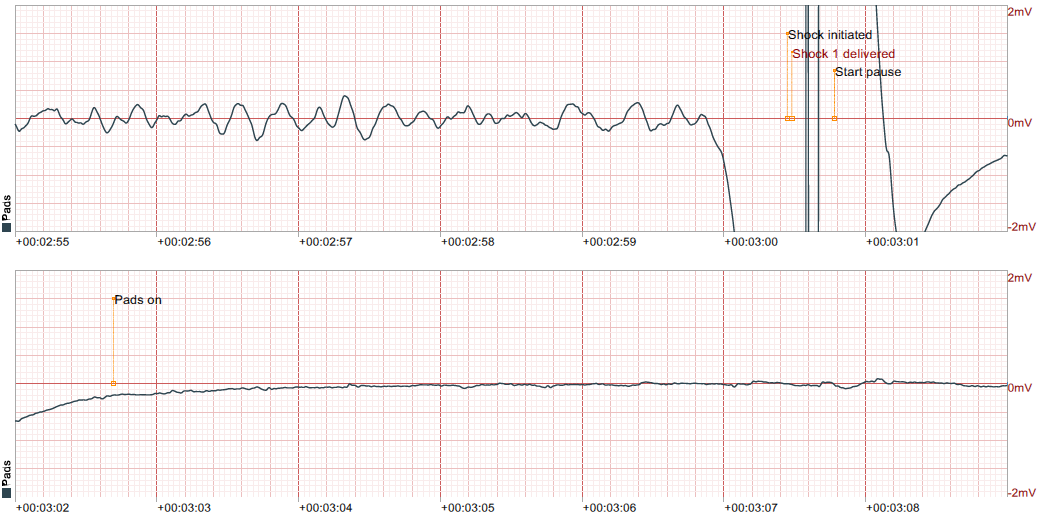
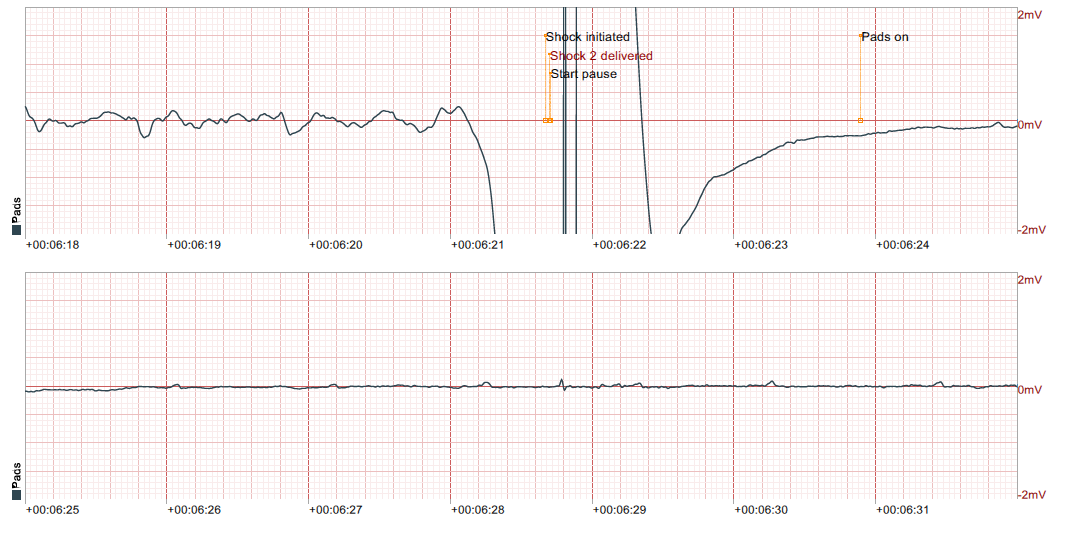
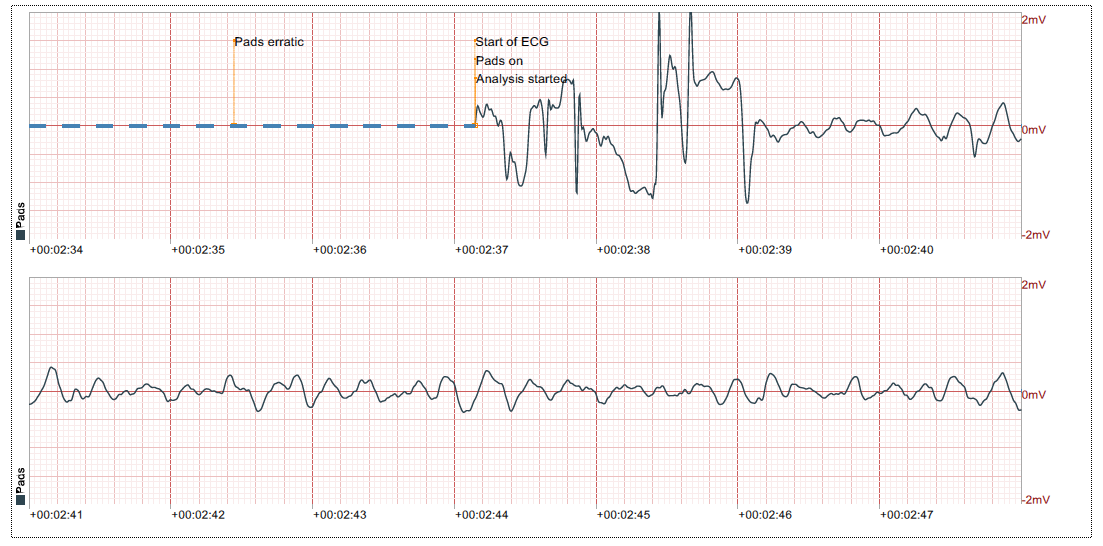
The patient was an 83 year-old male who went into cardiac arrest during a dental procedure.  The dentist immediately removed the rubber dam and began chest compressions while the patient was still in the dental chair.  The assistant activated 911 and retrieved the Philips Heartstart AED.  Upon arrival of the AED, it was turned on, and as we can see from the ECG, the pads were eventually placed on the chest, about two and a half minutes later.  According to the client, the delay occurred because, in the heat of the moment, he hadn’t realized that the plastic liner was still on the pads.  Despite the delay, the initial rhythm (below) is coarse ventricular fibrillation (VF), indicating that high quality CPR was being administered in the interim.  

High-quality CPR includes pausing compressions for no more than 10 seconds.   For this reason, AEDs are programmed to analyze and be ready to shock within 10 seconds  During this time, no CPR is supposed to be occurring so that the AED can analyze.  Note the time of shock in the ECG above.  Twenty-three seconds elapsed between the initial analysis and delivery of the shock.

The ECG above also shows that the shock changed the rhythm to asystole.  Evidence of chest compressions resuming can be seen below– 16 seconds after the shock, despite AED voice prompts instructing the user to begin compressions again.  Therefore,  total of about 40 seconds went by without compressions.  

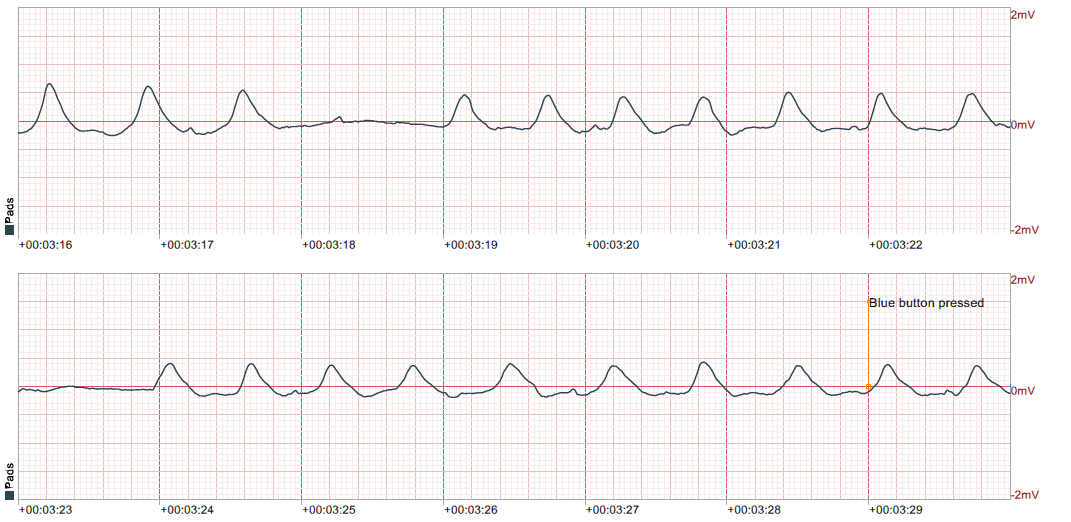
According to Philips, the AED is set to coach rescuers to give compressions at a rate of 100 / min.  This is the lower end of the current Emergency Cardiac Care (ECC) guidelines target of 100 – 120 / min.  The ECG below is consistent with this..

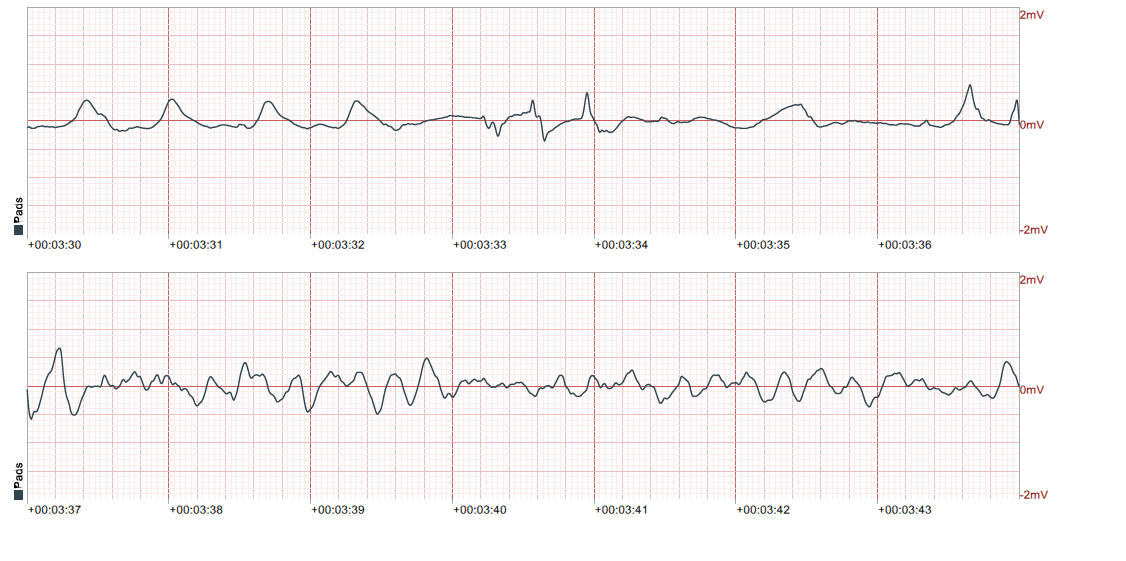
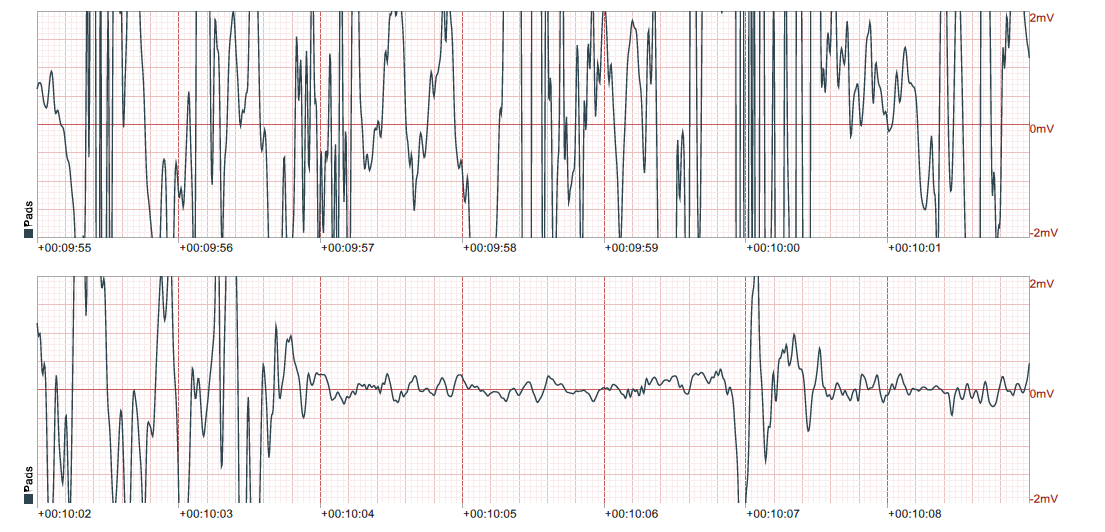
The ECG below shows the moment when the dentist stopped CPR and handed the emergency over to a police officer.  The patient was lowered to the floor and poor quality CPR resumed for the next three minutes.  It is important to note that prior to this moment, the underlying rhythm had changed back to ventricular fibrillation (VF), after just about 20 seconds of chest compressions, indicating the dentist was doing a great job at giving high-quality CPR.  Also note that after handing off the emergency to the police officer, the amplitude of the waveform flattens as time continues, indicating the quality of CPR is diminishing, if being performed at all.  Without blood flow to the heart muscle itself, the energy and oxygen reserves in the heart are quickly depleting, and anaerobic respiration is beginning to be the dominant form of ATP production.  Without oxygen infusion into the cells, this rhythm will eventually become a flat line, also known as asystole.   This is precisely what occurred after the next shock, as seen at time 6:21, below.

Another important note to make is that although the AED is programmed to reanalyze the ECG and reevaluate for a shockable rhythm after 2 minutes, it did not do so for 3 minutes after the first shock.  In talking with Philips USA’s tech team, I learned that the 2-minute counter begins after the AED gives instructions to begin compressions and sounds the metronome.  In this event, the blue “i” button was pushed at 3 minutes 29 seconds (not shown here).  This causes the internal timer to reset, and a set of verbal instructions to be given to the rescuers.  Pushing the “i” button in the melee delayed the time to next analysis and shock.  

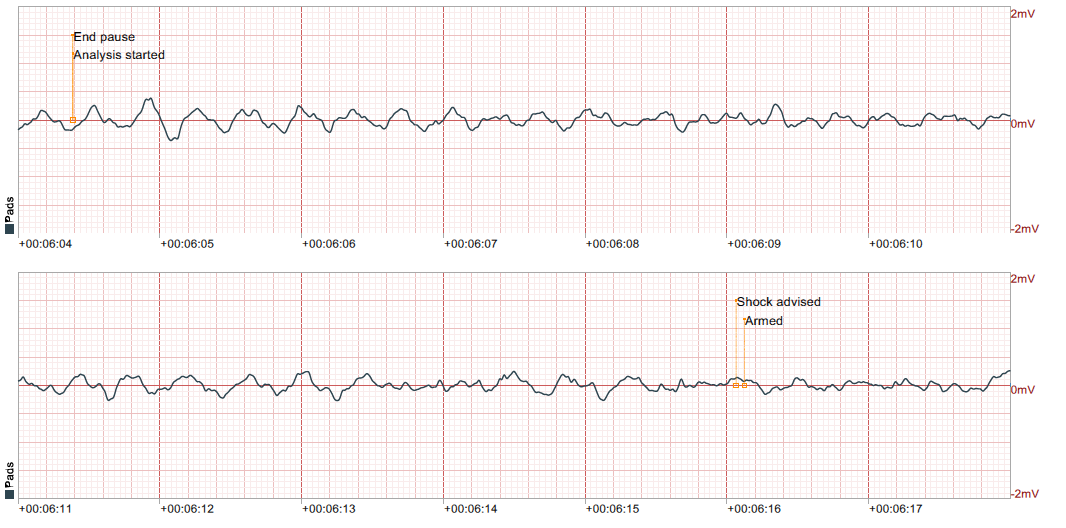
Upon arrival of EMS, a “Lucas” device was applied to the patient.  This device provides perfect chest compressions, tirelessly.  You can see the difference in the ECG below.  Note that only about 10 seconds of Lucas device compressions returns the rhythm to VF, as the device was paused so it could be adjusted on the patient’s chest.

The story ends less bleak.  With two additional shocks, epinephrine and a couple of doses of antiarrhythmic medication, the return of spontaneous circulation (ROSC) was achieved.  Two weeks later, the patient was extubated in the ICU with normal brain function, but could not move his extremities and had acute kidney injury.  His current disposition is not known.

Analysis

So why do we see what we do on the code summary?  To demonstrate, hold up a large textbook or similar item in one hand, suspending your arm above any surface.  Keep the item held up as long as you can.  What are you feeling in your arm as you hold the object up?  Most folks will say that their arm gets tired, feels weak, or perhaps has a burning sensation.

In order to keep the load suspended, the muscles in your shoulder need to twitch, or contract.  Contraction requires energy, both to slide the filaments of the muscle cells past each other, causing them to get shorter, but also to reset them to a resting stage, so they can contract again later.  Energy comes in the form of Adenosine Triphosphate (ATP) molecules that are, for the most part, produced in the mitochondria of the cells.  

During contraction, the first few seconds worth of ATP molecules comes from excess, resident ATP that is waiting to be used.  The next 20 seconds comes from the transfer of a phosphate group from creatine phosphate to ADP– a very quick process called direct phosphorylation.  But this source exhausts quickly as there is a finite amount of creatine phosphate available.  The greatest amount of ATP is produced through aerobic respiration.  

The first step, glycolysis, occurs outside the mitochondria of the cell.  One molecule of glucose yields 2 ATP molecules plus pyruvic acid.  The pyruvic acid moves into the mitochondria and in the presence of oxygen,  undergoes the series of Krebs cycle reactions, to form another 34 ATP molecules.  Aerobic respiration yields a total of 36 ATP for every single glucose molecule used.

As you were trying to hold the book up you needed more ATP than you could produce, because oxygen was quickly depleted from the muscle cell, and became a limiting factor.  Your circulatory system could not get enough oxygen to the muscle cells quickly enough to produce sufficient amounts of ATP.  Therefore, you were producing an abundance of pyruvic acid in glycolysis, but now the pyruvic acid was fermenting into lactic acid in the process of anaerobic respiration.  If you did not put the book down, you would have dropped it– the muscle would have eventually failed.  Did you feel the burning sensation of lactic acid flushing out of the muscle the moment you put that book down?

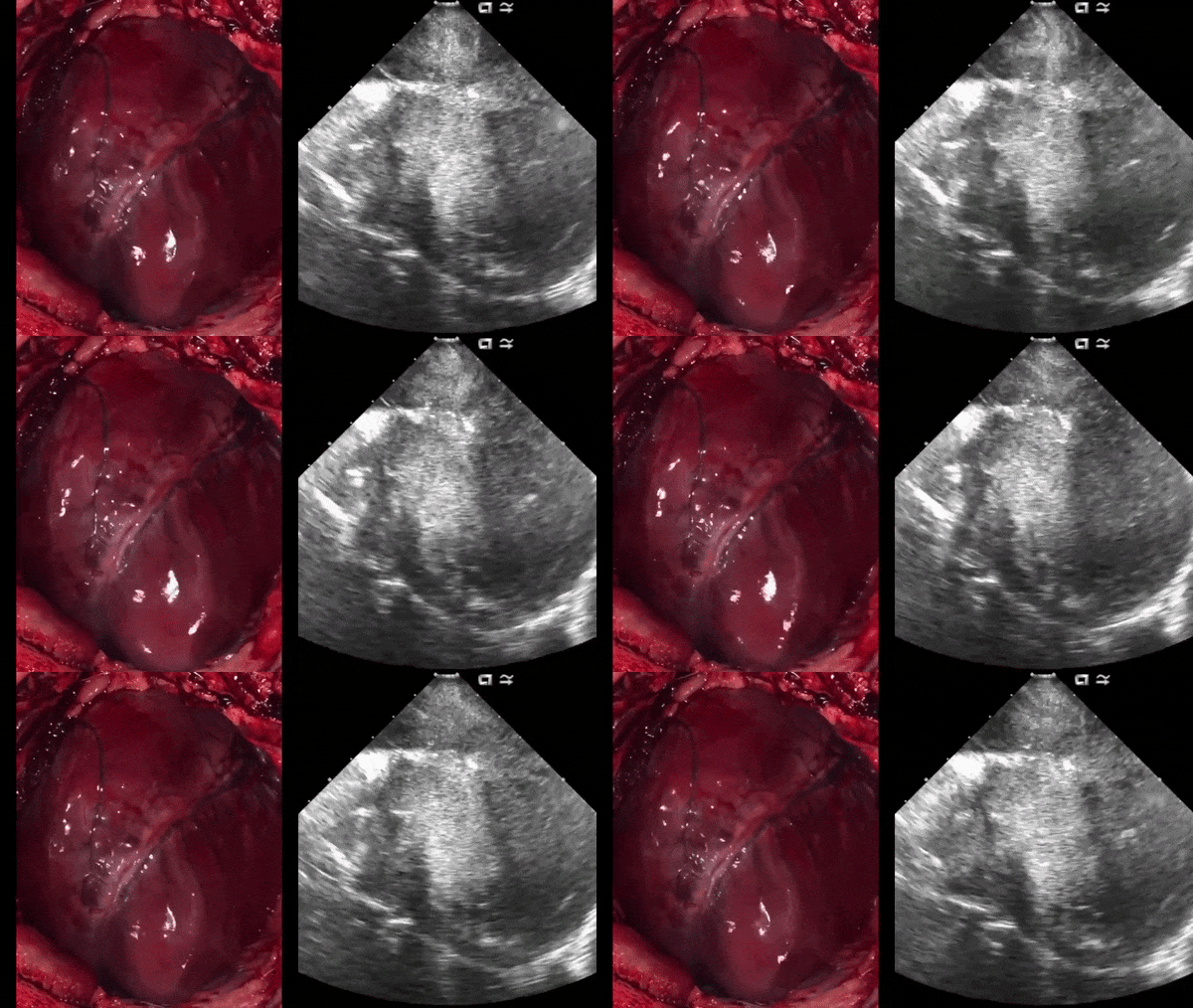
Below is a looped video showing the heart in VF.  Note that the muscle is twitching, just not in any organized fashion, and so it is ineffective in pumping blood forward to perfuse the organs of the body, including itself.  Twitching, even when chaotic, requires energy.  While there may be adequate glucose reserves in the muscle cell, oxygen is depleted, and so ATP cannot be produced with great efficiency.  The muscle fills with lactic acid. The shock from the AED causes every cell to depolarize simultaneously, in hopes of resetting the cardiac cycle, allowing the sinoatrial node to again become the pacemaker, returning the heart rhythm to one that is perfusing.  Without energy, the muscle cannot twitch and the nervous tissue cannot depolarize.  Therefore repolarization of the cells does not occur, and asystole or pulseless electrical activity (PEA) ensues.   

High quality chest compressions is the only way a lay rescuer can help deliver the resources needed to produce an overabundance of ATP.  Eventually, if all goes well, the combination of chest compressions, medications, and defibrillatory shocks will bring about ROSC, as the EMS crew did.  Immediate, high quality chest compressions both before AND after a defibrillation shock is what saves lives.   

As heart muscle dies from lack of nutrients and oxygen, rhabdomyolysis ensues.  The cell membranes break down and release myoglobin protein into the bloodstream.  These proteins affect the kidneys, effectively clogging the nephrons, resulting in acute kidney injury (AKI).  Much of the damage done in AKI may be irreversible, and even a patient who is successfully resuscitated may later die due to low kidney function and toxin buildup.

Lessons Learned

  1. Practice does make perfect.

When humans are encountered with tremendous stress, such as this emergency, we react in one of three ways: flight, fight, or freeze.  These are not conscious decisions, and are controlled solely by our sympathetic nervous system.  For this reason soldiers and police officers are taught tactical breathing and other ways to “get off their X”, which marks the spot they are frozen on.  One of the effects of the sympathetic nervous system is tunnel vision.  The ability to see the bigger picture is dampened and something like not realizing the liner on the pad hadn’t yet been removed happens.  I often see this same type of “deer-in-headlights” response when I field-train new EMTs and paramedics experiencing their first serious case.  I may have even had the same type of experience myself almost 30 years ago.  Only through practice and frequent drills could a minor detail like that have been seen and corrected immediately.  The lesson: Make sure you and your entire team are keeping up with your CPR AED recertifications.  Additional drills a few times per year (something Have Dummy Will Travel can help you with) are also helpful so that when the real thing occurs, you have been desensitized enough that the event becomes “just another day in the office”.  

  1. Immediate, high quality chest compressions (and defibrillation) is of paramount importance.

As described above, delivering chest compressions both before and after defibrillation saved this patient’s life.  If you are alone and witness cardiac arrest,  grab the AED and apply it immediately.  If you have a team around you, start CPR while someone else retrieves the AED for you.  If you did not witness the arrest, perform chest compressions for two minutes before applying the AED quickly. 

  1. Review the technology in your AED.

Any AED that was purchased around 2012, when the law requiring dentists to have an AED came about, has an expired warranty.  The technology in these devices is 40 years old, with little improvement.   The software in the Philips device, for example, does not pause to let the user know that the unit is charging.  During this charge phase of about 5-8 seconds, an opportunity to continue high-quality compressions is missed.

In addition, Philips delivers the same amount of energy to every patient, regardless of patient size or amplitude of VF.  A  newer unit might measure the patient’s BMI and the amplitude of the VF, and will customize the energy to be delivered.  The energy level in subsequent shocks will be escalated automatically.  Newer units can also recognize supraventricular tachycardia and treat it with synchronized cardioversion.  

The shock from a semi-automatic defibrillator requires the user to push the shock button.  This can be very intimidating, and it may take a  few seconds to build up the courage to push the button.  We see this very often in both training scenarios, and out in the field.  In a cardiac arrest, seconds count, and may be the difference between life and death.  Newer AEDs are available as fully automatic, removing the hesitation to deliver the shock.  

If you have an older AED, it might be time to replace it with upgraded technology.  Have Dummy Will Travel can help you make such decisions.

  1. Resume chest compressions immediately after the shock is delivered.

The time over which the shock is delivered is nanoseconds.  People are not batteries, we do not store a charge.  Therefore, chest compressions can, and should be, resumed immediately after the shock is delivered.  You do not need to wait for the AED to tell you it is safe to touch the patient.  To reduce the amount of hands-off time even further, advanced providers are taught to “hover” over the patient, ready to deliver compressions during analysis and the actual shock delivery time.  

  1. Do not use the rescue coach.

AEDs have built-in rescue coaches to help get the rescuer through the emergency.  They are designed to talk anyone through the procedure of applying the AED and delivering a shock, even if that person has never taken a CPR AED class before.  As an aside, New York State public access defibrillation law does not allow anyone who is not certified in CPR AED to use an AED.  

We train every healthcare provider NOT to use the rescue coach unless you need it to “get off your X” (see above).  If you know what you are doing, the rescue coach will only hinder your progress.  As we saw in the case study, summoning the rescue coach delayed the second shock to the patient, when he was not receiving high quality chest compressions. This increased the amount of lactic acid in the heart muscle, while depleting ATP and ATP-producing resources.    

  1. Effective compressions CAN be done in the dental chair.

We have the evidence that compressions that were performed in a dental chair were at least somewhat effective.  To drag an unresponsive adult human from a chair to the floor, and then to a space in the office that is wide-open enough to work takes time, and can potentially cause the rescuer to incur back injury.  

A dental chair offers the added feature of lifting the patient up or lowering him/her down, adjusting for the height of the rescuer, supporting effective compressions to be administered by almost anyone.  For best results, and to ensure the compressions do not cause damage to your chair, I suggest sliding the patient down the chair so that the middle of the chest is close to the seat, where the greatest support would be.  Position the top of the chair all the way back to support opening the patient’s airway.         

  1. Regardless of where you are, be prepared to work the code for several minutes.  

One of the most common comments I hear from clients is that “the fire department is right down the road”.  In this case study, the ambulance was located only one mile away from the dental office and was fully staffed at the time they were alerted.  Still, paramedics were not on scene for over 9 minutes.  Depending on where you are, a fully staffed ambulance may not be waiting for you to call.  You may need to wait additional time for volunteers to leave their homes and drive to the ambulance garage, gear up, and then drive to you.  Additional time is taken up in relaying the message from the 9-1-1 call taker to another dispatcher who activates the ambulance response. 

In high-quality CPR, compressors switch every two minutes while the AED analyzes.  In the above scenario, the patient should have received four shocks and four different compressor switches BEFORE paramedics arrived.    If your entire team is not trained and ready to pitch in, the quality of any single person’s compressions will dwindle, as will your patient’s chances of survival.

  1. Even when EMS arrives, you’re in it for the long haul.

In this case, EMS worked the patient for about 20 minutes until they achieved ROSC, and deemed the patient stable enough for transport.  This is pretty standard for cardiac arrests, and may even go longer.  In that time, you can only stand back and give paramedics any information you have regarding the patient’s medical history, medications and allergies.  Please don’t push them to work faster, or to take the patient out of the office.  At that point, paramedics are the best chance the patient has, but you need to let them work.    

Erik Zalewski is a Nationally Registered Paramedic and New York State EMS Certified Instructor Coordinator with over 28 years experience responding to 9-1-1 calls for medical emergencies.  Erik has taught EMTs and paramedics at Stony Brook University, Borough of Manhattan Community College, and the Suffolk County, NY EMS academy.  He and his team at Have Dummy Will Travel, Inc. are dedicated to helping medical professionals respond to emergencies safely, efficiently and in the most cost-effective manner possible.  Call or text 631-849-4978 for additional information.  

Intranasal Epinephrine: The solution every dentist has been waiting for?

ARS Pharmaceuticals, Inc.  has developed an intranasal (IN) epinephrine, “neffy”, designed for use in severe allergic reactions.  neffy is an aqueous epinephrine preparation with the addition of the functional excipient Intravail® A3 (dodecylmaltoside) to improve the bioavailability of the drug to increase absorption through nasal mucosa to injection-like levels without known injection-related adverse effects such as pain or irritation, and is already used in two other FDA-approved products.  

While still under review by the FDA, the data surrounding neffy’s safety and efficacy is pretty convincing.  Although there is no talk yet about what the cost will be, this could be a game changer for dentists.  Instead of buying expensive epinephrine autoinjectors or drawing up and injecting an intramuscular dose of 1:1000 epinephrine, a single dose sprayer can be applied into a patient’s nostril.  The sprayer device is identical in design to that which is already used to administer six other medications, including Narcan (naloxone).

In anticipation of neffy receiving FDA approval, Have Dummy Will Travel is working with our suppliers to provide this product to our clients.  In addition, we will be creating a brief training video to help relieve any anxiety over delivering medication through the intranasal route.     

Sublingual Epinephrine?

Intramuscular administration of epinephrine is considered to be the  treatment of choice in patients experiencing anaphylaxis in community settings.  Considering the skills that are needed to provide IM injections are often unfamiliar to dentists, many keep very expensive epinephrine auto injector devices in their emergency drug kits.  Since aqueous epinephrine degrades quickly in normal storage conditions, including exposure to light, heat, oxygen and neutral or alkaline pH values1, they have a relatively short shelf-life (12-14 months).  Wouldn’t it be great if there was a cheaper, easier to administer, and longer lasting alternative?

Sublingual epinephrine has been under development for at least 20 years, and a recently published study touts a new sublingual matrix, AQST-109, as a promising vehicle by which epinephrine may be administered2.  Results showed nearly equivalent, if not better, loading and peak concentrations, when compared to traditional intramuscular absorption.  

Don’t get too excited yet, as that study was only the first human study, as was performed on only 24 healthy adult volunteers.  While low molecular weight, lipophilic drugs such as epinephrine are likely absorbed across sublingual mucosa into venous circulation by transcellular diffusion3, there still is no evidence that absorption will be effective in the presence of edema in the lingus and other proximal mucosa, when the osmotic gradient favors mass movement to the interstitial space– a common occurrence during anaphylaxis.  In addition, a previous study4 found varied absorption rates of epinephrine delivered through the sublingual route.  To be fair, the epinephrine was in a powered formulation, different than the AQST-109 sublingual matrix, and included only 10 adult men in its dataset.  Another rabbit study5 hypothesized that sublingual absorption occurs in a series of peaks, as alpha effects of epinephrine causes vasoconstriction, limiting the amount of absorption possible after initial exposure.  

So for right now, we are in a holding pattern. 

This might also be a good time to think about the incidence of anaphylaxis in dentistry.  In my hundreds of conversations with dentists, it seems to me that anaphylactic shock is one of the most feared emergencies, yet very few have actually encountered a true anaphylactoid-like reaction in practice or elsewhere.  This inexperience is consistent with estimates that anaphylaxis occurs in 0.004 – 0.015 cases per dentist per year. 6-8  Morbidity occurs only in 0.5% to 1.5% of all anaphylaxis cases.9-11

Please do not get the impression that I am advocating for a dentist to abdicate responsibility to be prepared to manage an anaphylactoid-like scenario.  However, given the above, it seems difficult to justify spending upwards of $1000 every year or so on something you should not use during the off-chance of encountering a case of anaphylaxis.  Instead, you should know how to recognize anaphylactoid-like reactions, administer epinephrine, diphenhydramine and oxygen immediately, position the patient in the trendelenburg position (or as close as possible), and be ready to administer albuterol.  Most importantly, call 9-1-1 as soon as possible, keeping in mind that your emergency medical kit should be designed to keep your patient alive for 15 – 30 minutes.

Erik Zalewski is a Nationally Registered Paramedic and New York State EMS Certified Instructor Coordinator with almost 30 years experience responding to 9-1-1 calls for medical emergencies.  Erik has taught EMTs and paramedics at Stony Brook University and the Suffolk County, NY EMS academy.  He and his team at Have Dummy Will Travel, Inc. are dedicated to helping medical professionals respond to emergencies safely, efficiently and in the most cost-effective manner possible.  Call or text 631-849-4978 for additional information.  

References

  1. Rawas-Qalaji, M.M. et al (2013). Long term stability of epinehrine sublingual tablets for the potential first-aid treatment of anaphylaxis.  Annals of Allergy and Asthma Immunology. 111:567-579.
  2. Golden, D. et al. (2023). Pharmacokinetics and pharmacodynamics of epinephrine sublingual film versus intramuscular epinephrine.  Journal of Allergy and Clinical Immunology.  AB4.
  3. Birudaraj, R., Berner, Shen, S. & Li, X. (2005).  Buccal permeation of buspirone: mechanistic studies on transport pathways.  Journal of Pharmacological Science.  94:70-78.
  4. Simons, K.J., Gu, X., & Simons, F.E.R. (2004). Sublingual epinephrine administration in humans: A preliminary study. Journal of Allergy and Clinical Immunology.  113(2):S260.
  5. Rawas-Qalaji, M, Simons, F.E.R. & Simons, K.J. (2006). Sublingual epinephrine tablets versus intramuscular injection of epinephrine: Dose equivalence for potential treatment of anaphylaxis.  Journal of Allergy and Clinical Immunology. 117(2): 398-403.
  6. Girdler,  N.M. & Smith, D.G. (1999). Prevalence of emergency events in British dental practice and emergency management skills of British dentists. Resuscitation. 41:159–167. 
  7. Muller, M.P., Cansel, M., Stehr, S.N., Weber, S. & Koch T. (2008).  A statewide survey of medical emergency management in dental practices: incidence of emergencies and training experience. Emergency Medical Journal. 25:296–300. 
  8. Arasti, F., Montalli, V.A., Florio, F.M., et. al. (2010). Brazilian dentists’ attitudes about medical emergencies during dental treatment. Journal of Dental Education. 74:661–666.  
  9. Moneret-Vautrin, D., Morisset, M., Flabbee, J., Beaudouin E., & Kanny, G. (2005). Epidemiology of life-threatening and lethal anaphylaxis: a review. Allergy 60:443–451. 
  10. Helbling, A., Hurni, T., Mueller, U. & Pichler, W. (2004).  Incidence of anaphylaxis with circulatory symptoms: a study over a 3-year period comprising 940,000 inhabitants of the Swiss Canton Bern. Clinical and Experimental Allergy.  34:285–290. 
  11. Sheikh, A. &  Alves, B. (2001).  Age, sex, geographical and socio-economic variations in admissions for anaphylaxis: analysis of four years of English hospital data. Clinical and Experimental Allergy. 31:1571–1576.

Why Glucagon Should NEVER, EVER Be In Your Emergency Drug Kit

A client recently called me looking to purchase glucagon for her emergency medications kit.  Intrigued, I asked probing questions to determine the reason.  Apparently, she had recently attended a lecture on managing medical emergencies in the office and was given advice to keep this drug in her kit for cases of anaphylactic shock that is refractory to epinephrine due to beta-blocker use.  The reasoning (as I understood the client’s explanation) was that glucagon can block the beta1 receptors on the heart, nullifying the effects of the beta blockers.  There is a tremendous amount to unpack here.

The first item we should explore is the incidence of anaphylaxis in dentistry.  In my hundreds of conversations with dentists, it seems to me that anaphylactic shock is one of the most feared emergencies, yet very few have actually encountered a true anaphylactoid-like reaction in practice or elsewhere.  This inexperience is consistent with estimates that anaphylaxis occurs in 0.004 – 0.015 cases per dentist per year. 1-3  

According to the CDC4, 22.3% of the American population between 40 and 79 is on beta blocking medication.  If we extrapolate that only 40 – 79 year old patients visit a dentist; therefore 22.3% of dental patients are on beta blockers, and if we conservatively estimate that beta blockers will block the effects of epinephrine in all patients, we can estimate that anaphylaxis refractory to epinephrine is between 0.00009 and 0.0003345 cases per dentist per year.  

As an aside, morbidity occurs only in 0.5% to 1.5% of all anaphylaxis cases.5-7

Perhaps a 0.009% to 0.03% chance of having a patient in front of you who can, according to the lecturer, benefit from the use of glucagon is enough for you to want to spend upwards of $200 per milligram, just in case.  The following is a direct quote from the Journal of Oral and Maxillofacial Surgery8.  

The recommended dosage for glucagons [sic] is 1 to 5 mg (20 to 30 mg/kg [sic] [maximum dose, 1 mg] in children) administered intravenously over 5 minutes and followed by an infusion (5 to 15 mg/min) titrated to clinical response. Airway protection must be ensured because glucagon frequently causes emesis.

Raise your hand if you are comfortable starting an IV.  Many dentists I speak with tell me that they are uncomfortable giving an IM injection, at least until they take my training class.  Keep your hand up if you have IV start kits, fluids, tubing and catheters included in your emergency kit.  Keep it up if you are prepared to give an infusion over 5 minutes because you have an IV pump or flow-regulating device and feel comfortable enough to work out the mathematics involved in determining how many drops of  fluid to give per second after producing a particular concentration from adding the glucagon to an appropriately-sized fluid bag, and taking into account the size of the drops produced in your tubing.  Finally, keep your hand up if you have a cardiac monitor and the knowledge to recognize potential cardiac dysrhythmias and QT elongation before administering an IM/IV antiemetic like ondansetron for the airway complication you might create using glucagon.  Oh wait, do you have ondansetron?   

Still not convinced that glucagon is completely unnecessary and a waste of your hard-earned money?  Let’s look at the actual pharmacodynamics of glucagon and some of the other indicated medications we give patients in anaphylaxis.  

First, glucagon does NOT bind to or prevent beta blockers from binding to beta receptor sites in the heart.  Consistent with Hernández‑Cascales’ 9 meta-analysis of glucagon effects in both animal models and human ex situ experiments, glucagon is used in profound beta blocker overdoses because it has chronotropic effects on the myocardium– it causes the heart to beat faster.  Perhaps this is due to sympathetic nervous system stimulation at the hypothalamus and the elevation of circulating catecholamines.  Despite several papers describing the use of glucagon in beta blocker overdose, I have not been able to find any evidence that is not simply anecdotal– it seems that no clinical trials have been published.

Second, if we treat a patient in anaphylaxis properly, we would be using a multi-pronged approach.  Keep in mind that beta blockers are selective for beta1 receptors in the heart only and do not have an effect on beta2 receptors, located only in the lungs or alpha1 receptors located in the vasculature.  The first line medication is epinephrine, a non-selective alpha and beta agonist.  Since anaphylaxis is a form of distributive shock, alpha1 stimulation– peripheral vasoconstriction is really what we are looking for in epinephrine.  The lion’s share of the work is completed by shrinking the size of the venous reservoir, raising the blood pressure.  Increased chronotropy (beta1 effects) and bronchodilation (beta2 effects) are nice to have but much less important.  

Administering glucagon will increase blood sugar– that is its main job in the body.  Raising blood sugar causes blood acidosis.  Epinephrine is sensitive to pH and becomes less effective in severe metabolic acidosis (pH<6.8)10

The albuterol in your kit can be given for its beta2 effects (bronchial dilation).  It should be noted that albuterol is not purely beta2 in nature and that it does have some beta1 properties.  This is why xopenex is used  in patients where tachycardia is relatively contraindicated, as it is more purely beta2 in nature.   Albuterol will compete for the cardiac beta1 sites that are occupied by the beta antagonists, thus ameliorating at least some of the effects of beta blockers.

The diphenhydramine you have in your kit is also important in blocking the histamines that are released by degranulation of mast cells and neutrophils.  This has other important effects such as the prevention of edema in the airway as well as overall immune response to the allergen.  Oxygen is administered to a patient who received epinephrine, due to increased demand by the myocardium, thus reducing the production of lactic acid and preventing acidosis. 

Not in your kit, but worth mentioning is the use of steroids to quell the overall immune response and reduce inflammation and fluid boluses that are used to increase blood volume and thus pressure.   These can be administered by paramedics and hospital emergency rooms.  

Please do not get the impression that I am advocating for a dentist to abdicate responsibility to be prepared to manage an anaphylactoid-like scenario.  However, given the above, it seems difficult to justify spending upwards of $1000 every year or so on something you should not use during the off-chance of encountering a case of anaphylaxis that is refractory to epinephrine due to beta blocker use.  Instead, you should know how to recognize anaphylactoid-like reactions, administer epinephrine, diphenhydramine and oxygen immediately, position the patient in the trendelenburg position (or as close as possible), and be ready to administer albuterol.  Most importantly, call 9-1-1 as soon as possible, keeping in mind that your emergency medical kit should be designed to keep your patient alive for 15 – 30 minutes.

Erik Zalewski is a Nationally Registered Paramedic and New York State EMS Certified Instructor Coordinator with over 27 years experience responding to 9-1-1 calls for medical emergencies.  Erik has taught EMTs and paramedics at Stony Brook University and the Suffolk County, NY EMS academy.  He and his team at Have Dummy Will Travel, Inc. are dedicated to helping medical professionals respond to emergencies safely, efficiently and in the most cost-effective manner possible.  Call or text 631-849-4978 for additional information.  

References

  1. Girdler,  N.M. & Smith, D.G. (1999). Prevalence of emergency events in British dental practice and emergency management skills of British dentists. Resuscitation. 41:159–167. 
  2. Muller, M.P., Cansel, M., Stehr, S.N., Weber, S. & Koch T. (2008).  A statewide survey of medical emergency management in dental practices: incidence of emergencies and training experience. Emergency Medical Journal. 25:296–300. 
  3. Arasti, F., Montalli, V.A., Florio, F.M., et. al. (2010). Brazilian dentists’ attitudes about medical emergencies during dental treatment. Journal of Dental Education. 74:661–666.  
  4. Hales, C.M., Servais, J., Martin, C.B & Kohen, D. (2019).  Prescription Drug Use Among Adults Aged 40–79 in the United States and Canada.  NCHS Data Brief 347. www.cdc.gov/nchs/products/databriefs/db347.htm   Retrieved August 6, 2020.
  5. Moneret-Vautrin, D., Morisset, M., Flabbee, J., Beaudouin E., & Kanny, G. (2005). Epidemiology of life-threatening and lethal anaphylaxis: a review. Allergy 60:443–451. 
  6. Helbling, A., Hurni, T., Mueller, U. & Pichler, W. (2004).  Incidence of anaphylaxis with circulatory symptoms: a study over a 3-year period comprising 940,000 inhabitants of the Swiss Canton Bern. Clinical and Experimental Allergy.  34:285–290. 
  7. Sheikh, A. &  Alves, B. (2001).  Age, sex, geographical and socio-economic variations in admissions for anaphylaxis: analysis of four years of English hospital data. Clinical and Experimental Allergy. 31:1571–1576.
  8. Sharma, R., Sinha, R., Menon, P.S. & Sirohi, D.  (2010).  Glucagon for Persistent Hypotension in Patients Taking beta-Blockers.  Journal of Oral and Maxillofacial Surgery.  68(4):855-862.
  9. Hernández‑Cascales, J. (2018). Does glucagon have a positive inotropic effect in the human heart?  Cardiovascular Diabetology. 17:148.

Vidal, C., Grassin-Delyle, S., Devillier, P., Naline, E., Lansac, E., Menasche, P. & Faisy,C. (2014) Effect of severe acidosis on vasoactive effects of epinephrine and norepinephrine in human distal mammary arteryThe Journal of Thoracic and Cardiovascular Surgery. 147(5):1699.